

How to choose woven bag equipment suitable for large factories
For large-scale factories with mass production, the selection of woven bag equipment directly determines the production line's capacity ceiling, product qualification rate, labor costs, and long-term maintenance expenses. Unlike small workshops that choose single machines on demand, large factories prioritize the adaptability, operational stability, automated integration capabilities, and scalability of the entire production line. Blindly following trends to purchase high-speed or low-configuration equipment can easily lead to wasted capacity, process bottlenecks, high defect rates, and disruptions to overall production rhythm. The core principle for equipment selection in large factories is to match equipment configurations based on actual product categories, daily output requirements, and site conditions.
The first step in selection is to clarify your core production needs and establish the basic equipment configuration standards. Woven bags for different purposes have significantly different production processes, and the corresponding equipment parameters are also completely different. If a factory mainly produces ordinary feed bags, fertilizer bags, and general material packaging bags, it can focus on basic weaving and cutting-sewing processes; if it produces laminated waterproof bags, UV-resistant outdoor packaging bags, or food-grade woven bags, it needs to be equipped with laminating machines, high-precision printing machines, and supporting equipment that meets hygiene standards; for ton bags and heavy-duty industrial packaging bags, heavy-duty circular looms and reinforced bottom-sewing equipment must be selected to ensure the load-bearing and tear resistance of the finished products. At the same time, determine the automation level of the equipment based on daily and annual production plans. For a large-scale production line producing tens of thousands of finished products per day, prioritize fully automatic linked equipment; for small and medium batch custom production, semi-automatic equipment can be appropriately used to balance costs.
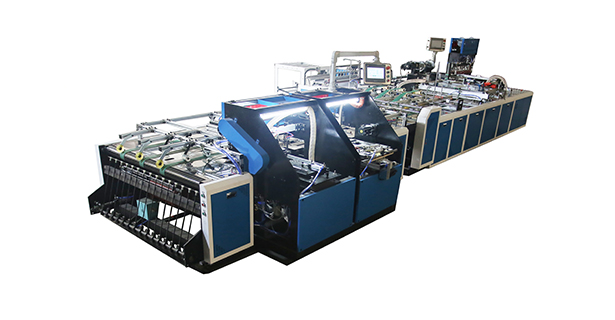
The performance matching of core machines in a complete production line is key to ensuring stable mass production. A full woven bag production line includes core equipment such as the extrusion machine, circular loom, printing machine, cutting and sewing integrated machine, and packaging machine. When selecting equipment for large factories, it is not enough to focus solely on the speed of individual machines; attention must also be paid to the process compatibility and adaptation between machines. As the front-end core equipment, the extrusion machine should prioritize servo energy-saving models with precise temperature control and uniform extrusion, effectively reducing raw material waste and adapting to long-term continuous production, avoiding defects in subsequent weaving caused by uneven extrusion thickness. The circular loom is the core that determines weaving capacity and fabric quality. For large-scale production, high-speed four-shuttle or six-shuttle heavy-duty circular looms are suitable, with a stable machine structure and consistent tension control, reducing issues like skipped or broken yarns during prolonged operation, ensuring fabric flatness and density uniformity.
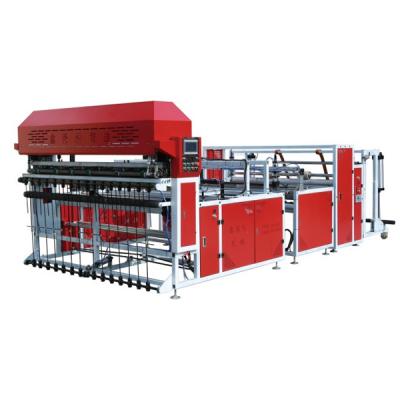
The precision of equipment in the printing and cutting stages directly affects product quality and market competitiveness. Factories with printing needs should select flexographic printers with the corresponding number of colors based on product color requirements, focusing on the equipment's registration accuracy and color mark tracking sensitivity. High-quality models can achieve high-speed printing without ghosting or misalignment, making them suitable for batch color printing orders. The integrated cutting and sewing machine is key to controlling finished product specifications. For mass production in large factories, servo-driven fully automatic cutting and sewing equipment is required, completing cutting, sewing the bottom, counting, and collecting materials in one integrated process. It offers small cutting errors and uniform, stable stitch spacing, avoiding issues such as dimensional deviations and skewed stitching caused by manual operations, while significantly reducing labor costs. Production lines requiring lamination or coating processes need to be equipped with fully automatic laminating equipment to ensure tight, bubble-free, and wrinkle-free lamination, enhancing the waterproof and wear-resistant properties of woven bags.
Select equipment based on the factory's operating conditions and long-term operational costs to meet the factory's long-term production needs. Large factory equipment often operates 24/7, making energy consumption, stability, and failure rates crucial. Prioritize energy-saving equipment with servo control systems, which have lower energy consumption compared to traditional models, significantly reducing electricity costs in long-term mass production. Also, consider the equipment's structural design; modular designs facilitate easier maintenance and part replacement later, effectively reducing downtime for repairs and ensuring continuous production lines. Factories with ample space can configure integrated full-line equipment to enhance production continuity; those with limited space can choose compact linked models to plan layouts rationally and avoid space waste. Additionally, strictly comply with local environmental standards by selecting low-dust, low-noise compliant equipment to mitigate risks of environmental rectification.
The degree of automation and scalability of equipment is an important consideration for the upgrade and iteration of large factories. At present, the woven bag production industry is gradually transitioning towards intelligence and unmanned operation. When selecting equipment, large factories should not only meet current production needs but also reserve space for future upgrades. Priority should be given to models that support functional expansion and digital parameter adjustment. Based on order requirements, modules such as automatic deviation correction, intelligent counting, remote monitoring, and automatic packaging can be added later, allowing for capacity and process upgrades without replacing the entire equipment. Factories with large-scale production and stable orders can directly adopt fully automated production lines to achieve full-process linkage from raw material drawing, weaving, printing, cutting and sewing to packaging, significantly reducing reliance on manual labor. Factories with diverse order types and a high number of customized orders can choose flexible equipment that supports quick machine adjustment and specification switching, adapting to multi-category production needs.
The strength of the equipment manufacturer and after-sales service are the fundamental guarantees for the stable operation of the production line. Equipment procurement for large factories is a long-term investment, making equipment quality, parts supply, and after-sales response speed particularly important. When selecting equipment, priority should be given to original manufacturers with large-scale production capabilities and solid technical expertise, avoiding intermediary OEM equipment. Key considerations include the manufacturer's equipment technology, overall build quality, and core component quality, while also confirming whether the manufacturer can provide one-stop services such as full-line solution design, on-site installation and commissioning, and operator training. During long-term mass production, equipment will inevitably experience wear and malfunctions. A reliable manufacturer can quickly provide after-sales support such as parts replacement, fault repair, and equipment calibration, minimizing downtime losses and ensuring the continuous and stable operation of the production line.
Overall, the selection of large-scale factory woven bag equipment is not about blindly pursuing high-speed, high-cost machines, nor simply cutting costs by choosing low-end models. The core lies in matching a complete production line that is process-adapted, stable in performance, controllable in energy consumption, and capable of long-term iteration, based on the company's product positioning, production capacity, site conditions, and budget planning. Only by balancing current production needs with future upgrade potential, and weighing product quality, production efficiency, and operational costs, can one choose woven bag production equipment suitable for the factory's long-term development and enhance the company's mass production competitiveness.




 鲁公网安备 37162202000141号