

Rectification plan for various problems arising from long-term use of woven bag equipment
After 3-5 years of continuous operation of the woven bag production line, issues such as wear, aging, and decreased process adaptability have led to a 5%-8% reduction in product qualification rate and a 12% increase in unit energy consumption. Additionally, there are safety hazards such as abnormal transmission noise and temperature control failure. To ensure stable production and improve product quality, this rectification plan is formulated.
First, conduct a comprehensive inspection and classification to identify the root causes of core issues: first, mechanical hazards—the main blown film roller has a 0.15mm eccentricity due to long-term load, the traction roller surface wear causes uneven friction, the gearbox seal aging leads to oil leakage, and bearing clearance exceeding 0.3mm results in continuous abnormal noise; second, electrical issues—the temperature control module aging causes a temperature deviation of ±2°C in the heating zone, the insulation resistance of three main motors drops to 0.3MΩ (below the safety threshold of 0.5MΩ), and some main line cables have cracked outer sheaths; third, process support issues—the winding tension is manually adjusted and unstable, the bag body stretching deformation rate exceeds 3%, the printing registration deviation is ≥1mm, and the composite film layer is prone to blistering and delamination.
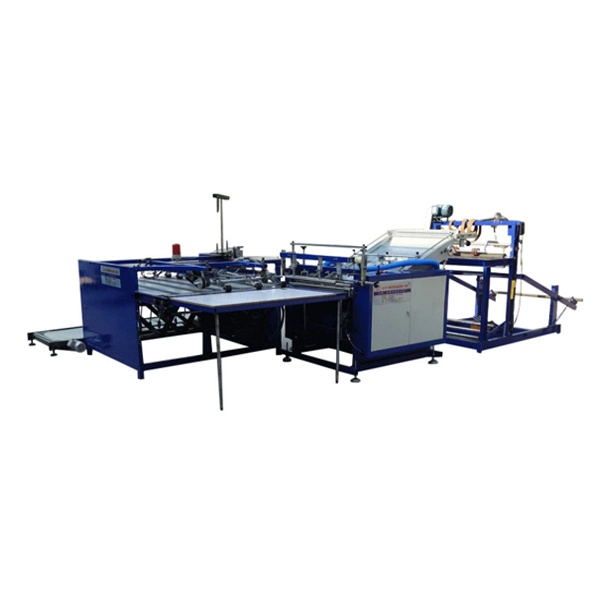
In response to the above issues, precise corrective measures are formulated by module: First, mechanical system rectification—disassemble the eccentric roller and use high-precision dynamic balancing correction equipment to ensure that the eccentricity at rated speed is ≤0.02mm; wrap the worn traction roller with a 5mm thick wear-resistant polyurethane layer to improve friction uniformity; replace the gearbox seals, top up with fully synthetic gear oil to the liquid level line, and replace substandard deep groove ball bearings to eliminate transmission noise. Second, electrical system upgrade—replace the aging temperature control module with a PID intelligent temperature control system to achieve independent temperature control for each heating zone with an accuracy of ±0.5°C; perform insulation repair on the main motor coil, replace the main trunk cable with a flame-retardant one meeting GB standards, and install online current and temperature monitoring devices, recording operating parameters every 2 hours. Third, process parameter calibration—adopt PLC segmented control for winding tension, setting a stable tension of 10N for unwinding, 25N for the middle section, and 30N for the winding end to reduce bag deformation; re-align the printing roller reference and use a photoelectric sensor for automatic correction, controlling deviation within 0.2mm; adjust the adhesive ratio and set the preheating temperature to 60-65°C to eliminate interlayer bubbling issues.
Establish a long-term maintenance mechanism to ensure the implementation of rectification: Develop a tiered maintenance system including weekly inspections (cleaning roller surfaces, checking for abnormal noises), monthly inspections (testing insulation, temperature control accuracy), and quarterly inspections (calibrating roller balance, replacing vulnerable parts); organize hands-on training for operators to master basic troubleshooting methods; track operational data for three months after rectification to ensure product qualification rate increases to over 98% and unit energy consumption decreases by 8%.
This plan will complete a comprehensive inspection within 10 days and all rectification work within 20 days, effectively addressing the core issues of long-term equipment use, laying the foundation for stable and efficient woven bag production.




 鲁公网安备 37162202000141号