

What are the advantages of the integrated cutting, seaming, and printing machine for woven bags?
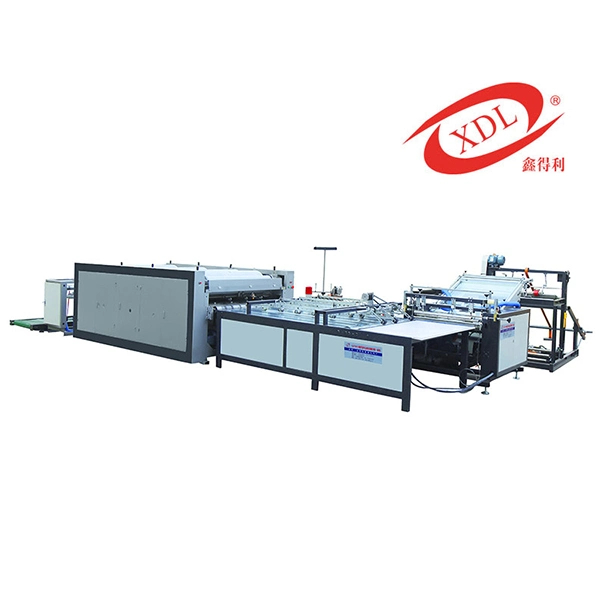
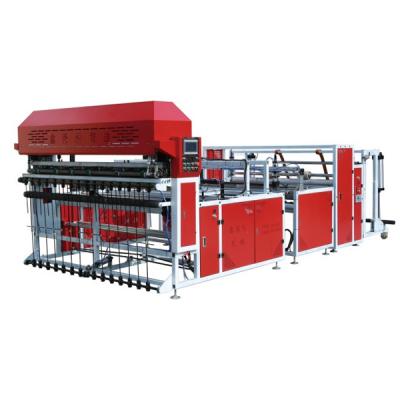
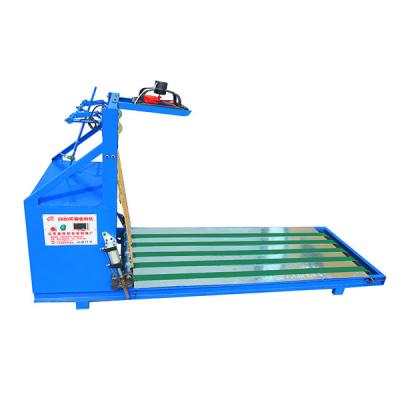
The integrated cutting, sewing, and printing bag finishing machine is an automated production equipment that integrates core functions such as cutting, edge sewing, heat sealing (or bottom sewing), printing, and bag collection. It is widely used in the processing stages of plastic woven bags, paper bags, composite bags, and other packaging products. Compared to traditional decentralized production modes (where cutting, hemming, printing, and other processes are carried out independently, requiring manual material transfer), its advantages are evident throughout the entire production process, bringing significant efficiency gains to the enterprise. The following details elaborates on its core advantages from multiple dimensions:
1. Production Efficiency: Continuous operations eliminate process bottlenecks
In traditional production, the dispersion of various processes results in high material transfer and waiting times, requiring multiple people to collaborate on a single production line, which limits efficiency. The all-in-one machine achieves continuous operation of the entire process from "raw material input—cutting—seaming—printing—receiving materials" through an integrated design, eliminating gaps between steps. For example, when a company uses traditional equipment, it can only produce 1,500-2,000 woven bags per hour, but after switching to an all-in-one machine, the hourly output increases to 3,000-4,000 bags, with an efficiency increase of over 50%. In addition, the equipment uses servo motors to drive cutting and feeding, with stable and adjustable speed, allowing for flexible adjustment of the production rhythm according to order requirements, significantly shortening the delivery cycle.
2. Cost Control: Reducing costs and increasing efficiency covers the entire chain
1. Labor costs are significantly reduced
In traditional mode, each process of cutting, hemming, and printing requires separate workers (usually 3-5 people per line), while the all-in-one machine only requires 1-2 operators (responsible for feeding materials, monitoring, and simple maintenance), reducing the labor requirement by more than 60%. Based on an annual average wage of 60k yuan, a single production line can save 12-240k yuan in labor costs per year.
2. Material loss has been significantly reduced
The all-in-one machine, through precise photoelectric positioning and servo control, achieves a cutting accuracy of ±1mm, avoiding the size deviations of traditional manual cutting; the printing process uses an automatic color-matching system, with pattern position errors less than 0.5mm, reducing waste caused by printing misalignment. According to statistics, the material loss rate can be reduced from the traditional 5% to less than 1%, saving tens of thousands of yuan in raw material costs each year.
3. Energy and maintenance cost optimization
The all-in-one machine integrates multiple process functions, reducing energy consumption by about 20% compared to the simultaneous operation of multiple independent devices. The equipment adopts a modular design, making maintenance centralized and convenient, thereby reducing the frequency and cost of maintenance for scattered devices.
3. Product Quality: Standardized output ensures consistency
Traditional production relies on manual operations, which can easily lead to issues such as uneven cutting lengths, loose stitching at the seams, and misaligned printed patterns, with a defect rate typically exceeding 3%. The all-in-one machine ensures stable quality through the following methods:
Precise Control: Cutting length is set by the program, seam tension is automatically adjusted, and printing pressure and speed are monitored in real-time
Intelligent Detection: Equipped with functions such as line disconnection detection, material shortage alarm, and printing deviation correction, the machine immediately shuts down upon detection of any abnormalities, preventing the production of mass defects
Standardized Process: The parameter storage function can save production plans for different specifications of products, eliminating the need for re-adjustment when switching orders, ensuring consistent quality in every batch.
The final defect rate can be reduced to below 0.5%, enhancing the product's market competitiveness.
4. Flexibility: Quickly respond to multi-variety order requirements
The current packaging market is characterized by a trend of "small batches, multiple varieties, and customization." Switching specifications on traditional equipment requires changing molds and adjusting parameters, which takes 1-2 hours. The all-in-one machine allows for quick adjustments of cutting length, printing patterns, edge finishing methods, and other parameters through touch screen operation, with the switching time reduced to less than 10 minutes. For example, for the logo printing needs of different customers, it is sufficient to import new printing files to start production, which greatly enhances the order response speed and meets personalized customization requirements.
5. Space Utilization: Compact design saves factory resources
Traditional decentralized production requires the space of multiple equipment units (usually 8-10) ㎡ The all-in-one machine features a compact layout, taking up only 3-5 square meters of space ㎡ Saves over 50% of factory space. For small and medium-sized enterprises, it can increase the number of production lines within limited space, thereby enhancing production density.
6. Environmental protection and safety: Green production is more reliable
Environmental friendliness: The all-in-one machine is equipped with a dust collection device and a noise suppression system, reducing dust emissions and noise pollution during production (noise reduced to below 75dB), complying with environmental standards
Safety: The equipment features a fully enclosed design, with safety protection devices in key areas (such as emergency stop buttons and photoelectric protection) to reduce the chance of manual contact with hazardous components and lower the risk of workplace injuries.
7. Data-Driven Management: Supporting Lean Production in Enterprises
Modern all-in-one machines typically integrate a data collection system that can record real-time data such as output, qualification rates, and equipment operating time, and upload it to the MES system. By analyzing this data, enterprises can optimize production plans, adjust equipment parameters, predict maintenance needs, and achieve lean management. For example, by analyzing data to find that the equipment failure rate is high during a certain period, maintenance can be scheduled in advance to reduce downtime.
The advantages of the integrated cutting, sewing, and sealing machine for woven bags not only lie in the direct increase in efficiency and cost savings, but also in its upgrade of production modes—moving from a decentralized, labor-reliant model to a centralized, automated one. For packaging companies, the introduction of this equipment not only enhances competitiveness but also allows them to adapt to the industry's trends of intelligence and greening, laying a foundation for the company's long-term development.




 鲁公网安备 37162202000141号