

The plastic weaving industry is ushering in a new chapter of energy conservation.
According to incomplete statistics from the plastic weaving industry, China produced approximately 29,000 sets of various plastic weaving machinery and equipment in 2011, including about 1,080 wire drawing machines, 18,200 circular looms, coating machines, printing machines, and other auxiliary equipment, with a total output value of about 2.5 billion yuan, representing a year-on-year increase of about 7.4%. In terms of regional distribution across the country, the top four cities in terms of growth rate were Changzhou, Wenzhou, Yantai, and Shantou.
Significant achievements in energy conservation and emission reduction
Through efforts made between 2008 and 2011, the plastic weaving industry made significant progress in energy conservation, with 67% of plastic weaving enterprises undertaking energy-saving renovations. Actual electricity savings reached 570 million kWh in 2008, 1.42 billion kWh in 2009, 2.38 billion kWh in 2010, and 5.23 billion kWh in 2011, totaling nearly 10 billion kWh, achieving significant economic and social benefits.
Energy conservation and emission reduction are developing in depth.
A significant portion of the production cost of woven bags lies in energy consumption, typically accounting for around 20-30% of the manufacturing cost. Eliminating outdated equipment and introducing advanced, energy-efficient woven bag production equipment is a crucial measure for energy conservation and consumption reduction. In 2010, Huangshi Huaxin Packaging Co., Ltd. introduced a heat-sealing square valve bottom bag production unit from W&H Company; Tianjin Huajin Plastics introduced a heat-sealing square valve bottom bag unit from Starlinger. The introduction of advanced equipment significantly reduced labor costs, lowered energy consumption, and improved product quality.
Currently, China's plastic weaving industry should focus on introducing wide-width die-drawing machines, energy-saving circular looms, and electromagnetic heating technology. Capable enterprises can introduce high-speed wire drawing machines and advanced foreign plastic weaving equipment. For example, the Pingyang County People's Government in Zhejiang Province commissioned experts to formulate a plan for the adjustment and upgrading of the plastic weaving industry in Pingyang County. It decided to allocate 25 million yuan of government funds during the "12th Five-Year Plan" period to support technological transformation in the plastic weaving industry and also encouraged leading enterprises to introduce advanced foreign equipment.
In 2010, about 67% of plastic weaving enterprises in China adopted energy-saving plastic weaving machinery or carried out various forms of energy-saving renovations. As a result of the renovations, the energy consumption per ton of drawing machines and circular looms reached below 450 kWh.
If we calculate based on the fact that 67% of plastic weaving enterprises reduced their energy consumption per ton from 1750 kWh to 1300 kWh after energy saving, then in 2011, 67% of the 12 million tons of plastic weaving products nationwide actually saved 3.62 billion kWh, an increase of 52% year-on-year. This growth was hard-won.
The performance of production equipment urgently needs improvement
Although the performance of China's existing plastic woven production equipment has been greatly improved in recent years, it is still not enough under the new situation. The output of high-line speed wire drawing machines represented by Changzhou Yongming and Hengli is about 500 kilograms per hour, and the output of wide-width die drawing machines represented by Yanfeng Group and Zhejiang General is about 250 kilograms per hour. At present, the linear speed of wide-width die heads is not high, and the die heads of high-line speed wire drawing machines are not wide, and they all use a single single-screw extruder. The biaxially oriented polypropylene film production equipment represented by Bruckner in the world has multiple co-extrusion and twin-screw extrusion, wide-width die heads, the finished film width exceeds 8 meters, and the linear speed exceeds 450m/min; it is different from plastic braiding production but has many similarities. For example, the raw material is polypropylene, the first process is cast film, and the first stretch is longitudinal stretching. The difference is that plastic braiding uses film cutting, and there are hundreds of filaments. Therefore, plastic knitting companies can learn from the use of multiple co-extrusion machines to increase extrusion volume, wide-width dies can develop to high line speeds, and high-line speed wire drawing machines can develop to wide-width dies.
Circular looms have made rapid progress in recent years, with power reduced from the original 4.5 kW to 1.5 kW. The 1.2 kW circular loom launched by Yanfeng Group has been very popular with users, selling nearly 8,000 units in 2011 alone. The development of circular looms should aim to allow one person to operate 6-8 looms, minimizing labor requirements.
In 2011, the industry vigorously promoted the application of a series of new energy-saving equipment, such as wide-width die-drawing machines, third-generation energy-saving circular looms, and electromagnetic heating devices. A number of leading enterprises increased their investment and adopted advanced energy-saving equipment to transform traditional outdated equipment, reducing the energy consumption per ton of plastic woven bags from 1,500-1,700 kWh to below 1,000 kWh. Examples include Shandong Guangqing Group, Nansheng Group, Sichuan Qile Group, Tianjin Huajin Plastics, and Huazheng Plastics Group. Some enterprises even achieved energy consumption below 800 kWh, reaching or approaching the international advanced level.
There are many ways to save energy in the plastic weaving industry, and recently the focus has been on drawing machines, circular looms, and bag making machines.
Main ways to save energy in wire drawing machines
First, the trend towards larger sizes involves increasing the screw size and widening the die head, thereby increasing the production capacity and raising the daily output of flat yarn per drawing machine from 3 tons to 6 tons, achieving energy conservation and consumption reduction. In Changzhou and other areas, the dies of drawing machines are generally wider than in previous years, and the screw diameter is larger, improving production efficiency. Drawing machines in Wenzhou are developing towards wider dies, with some achieving a daily output of 6 tons or more.
II. Improving Screw Speed and Production Continuity. This requires upgrading the equipment itself to increase screw speed, thereby improving production efficiency and reducing energy consumption per unit of product. Wenzhou's economical wire drawing machines have a linear speed of approximately 130 meters per minute, while Changzhou's are around 230 meters per minute. Changzhou Hengli has now increased the linear speed to 600 meters per minute, and Stalingrad and Changzhou Yongming have increased it to approximately 500 meters per minute, increasing production capacity by 2-4 times while maintaining essentially the same energy consumption, or even lower. The winding machine of this type of wire drawing machine uses a frequency converter to control the motor drive, significantly reducing drive consumption. The traditional 180-watt motor is reduced to 110 watts, while the actual consumption is only about 50 watts, equivalent to a 75% energy saving per ton of product compared to ordinary disk technology in the winding section.
Third, seek energy saving and consumption reduction from the heating method of wire drawing machine. In 2008, more and more plastic weaving enterprises adopted quartz heating coils, which can save 8-15% energy in the screw heating part; after 2009, plastic weaving enterprises began to use electromagnetic heating, which can save 30-60% energy in the screw heating part; some plastic weaving enterprises also use coal-fired thermal oil to heat the flat yarn stretching and shaping, which can reduce heating power consumption by 12-30%.
IV. Improve the strength of flat yarn. Stalingler's drawing machine can produce flat yarn with a strength of about 15-20% higher [0.4N/tex (4.5g/den)] than ordinary domestic drawing machines, and greater than 0.53N/tex (6g/den) based on the same raw materials.
Main ways to save energy and reduce consumption in circular looms
1. Choose a small six-shuttle or small eight-shuttle circular loom. With the same energy consumption per machine, the output is 30-25% higher than that of a four-shuttle or large six-shuttle circular loom.
Second, continue to select four-shuttle circular looms and adopt energy-saving four-shuttle circular looms with reduced cam curve creep, so as to reduce drive power and reduce the power consumption of each circular loom by 1-1.5 kWh per hour.
III. Vigorously promote energy-saving cam-type small six-shuttle circular looms: Their power saving rate reaches over 60%, and efficiency is increased by over 40%. Compared with currently produced small cam four-shuttle circular looms, the power saving rate is about 25%, and efficiency is increased by about 30%. The third-generation cam four-shuttle loom operates at 170 rpm and uses a 3KW motor; the small cam four-shuttle loom operates at 170 rpm and uses a 2.2KW motor; the energy-saving small cam six-shuttle circular loom operates at 150 rpm and uses a 2.2KW motor; and the old-style circular loom operates at 150 rpm and uses a 4KW motor.
Fourth, by learning from and promoting advanced foreign experience, the width of the woven fabric threads can be increased from 2.5mm to 4-5mm in terms of production technology, which reduces the unit energy consumption for woven fabric production by 50%. Labor costs and equipment investment will also be reduced by 50% accordingly.
Main ways to increase income from bag making machines
In 2011, the industry vigorously promoted the application of a series of new energy-saving equipment, such as wide-width die-drawing machines, third-generation energy-saving circular looms, and electromagnetic heating devices. A number of leading enterprises increased their investment and adopted advanced energy-saving equipment to transform traditional outdated equipment, reducing the energy consumption per ton of plastic woven bags from 1,500-1,700 kWh to below 1,000 kWh. Examples include Shandong Guangqing Group, Nansheng Group, Sichuan Qile Group, Tianjin Huajin Plastics, and Huazheng Plastics Group. Some enterprises even achieved energy consumption below 800 kWh, reaching or approaching the international advanced level.
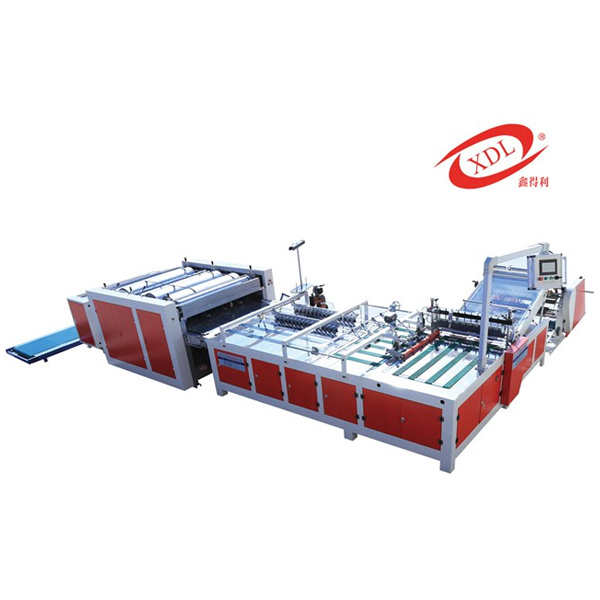
While bag-making machines may not have much potential for energy saving, they can greatly reduce labor costs.
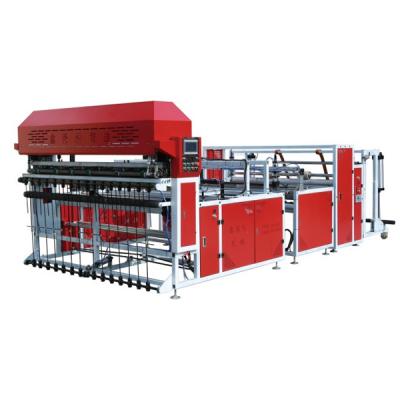
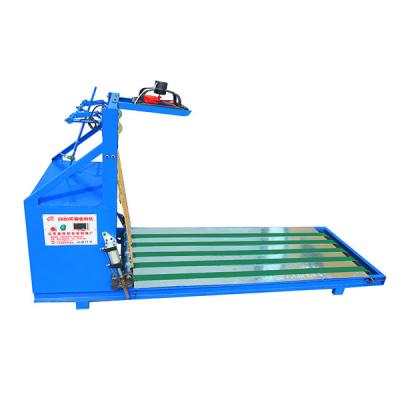
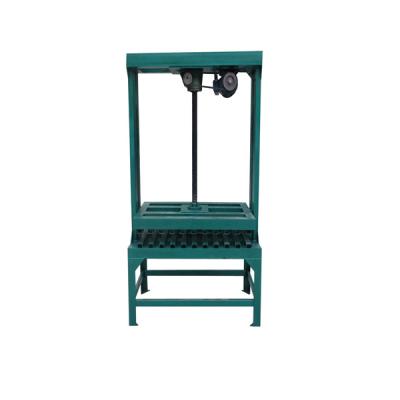
In 2011, the main practices of plastic weaving enterprises in bag-making technology were: 1. Changing from manual cutting of woven fabric to automatic mechanical cutting to save labor, such as using continuous printing machines for tubular fabric and automatic sewing machines. 2. Plastic weaving enterprises with the conditions and funds began to use square bottom valve bag units to produce valve bottom bags, which not only saves labor but also improves the quality of woven bag products.




 鲁公网安备 37162202000141号