

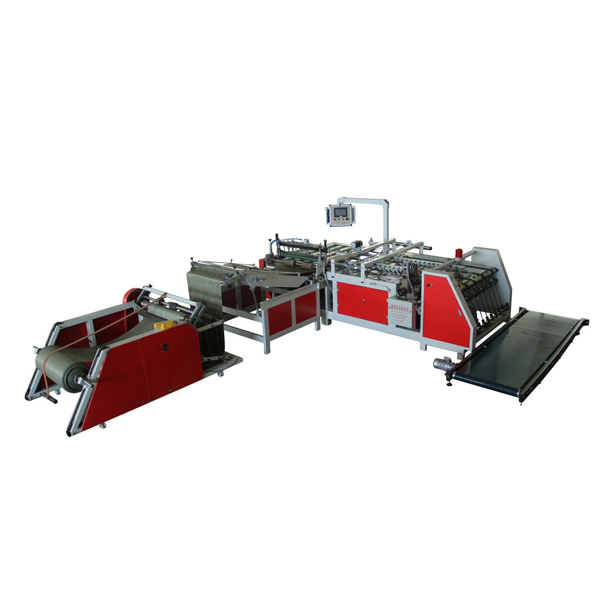
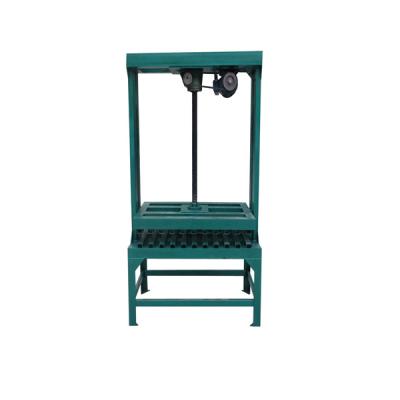
Smokeless knife cutting machine
The Current Status and Development Direction of Woven Bag Equipment, Plastic Woven Bags, and Woven Bag Machinery: In the late 1970s, my country introduced plastic woven bags, followed by weaving equipment. Plastic woven packaging, with its advantages of durability, low cost, and simple manufacturing process, has been rapidly adopted in many fields, especially for large-capacity transport packaging. The use of plastic woven bags for cement packaging began in 1982. Hundreds of plastic woven bag production lines have been imported from different countries, including a dozen or so relatively complete and advanced sets of equipment.
Smokeless knife cutting machinePerformance and features:
1. This machine adopts a fully automatic PLC control system, touch screen operation, and servo drive. Cold cutting or hot cutting models are available.
2. Hot Cutting: Features an automatic pinch-to-open device to prevent bag openings from sticking. The cutter is made of imported materials, ensuring it does not deform under heat and achieving smokeless and environmentally friendly operation.
3. Cold-cut: Imported materials, durable and practical.
4. Automatic feeding, automatic deviation correction, automatic tracking, fixed displacement, handle hole, ventilation hole, automatic counting, batch feeding, wire breakage alarm, fault and joint automatic stop prompt.
5. This machine is suitable for fertilizer bags, rice bags, flour bags, putty powder bags, single-color bags, double-color bags, and laminated bags, etc.
6. Optional machine for both sewing the opening and sewing the bottom.
7. Variable frequency speed control and automatic adjustment of cutting speed.
8. Bag pressing, thread cutting, flipping, displacement, electric control, stable operation, and low failure rate.
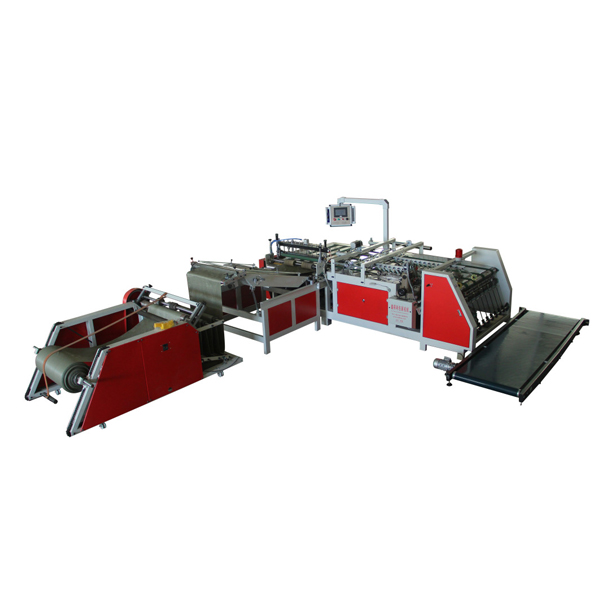
The Current Status and Development Direction of Woven Bag Equipment, Plastic Woven Bags, and Woven Bag Machinery: In the late 1970s, my country introduced plastic woven bags, followed by weaving equipment. Woven packaging, with its advantages of durability, low cost, and simple manufacturing process, was rapidly adopted in many fields, especially for large-capacity transport packaging. The use of plastic woven bags for cement packaging began in 1982. Hundreds of woven bag production lines were imported from different countries, including a dozen or so relatively complete and advanced sets of equipment. From the mid-1980s, Zhejiang and Jiangsu provinces in my country successively developed domestically produced equipment and launched it on the market in large quantities, making a significant contribution to the development of my country's woven bag equipment and plastic woven packaging industry.
The 1990s saw rapid development in woven plastic packaging. By 1995, 5.6 billion woven plastic bags were used for cement packaging, accounting for two-thirds of the total cement packaging volume that year. The implementation of the "Cement Packaging Bag" standard further spurred the development of woven plastic bag manufacturing enterprises and equipment manufacturers, leading to a proliferation of woven plastic factories and equipment manufacturers of various levels. However, the overall industrial structure and scale of the woven plastic industry exhibited a fragmented and small-scale phenomenon, with most enterprises possessing only one production line. Due to their small size and insufficient production capacity, these enterprises struggled to align with international standards, develop a series of woven products, and achieve technological innovation. In recent years, many entrepreneurs recognized this and formed woven plastic groups, and in some regions, "woven plastic cities" and other loosely organized cooperative entities emerged. After years of weeding out the weak and retaining the strong, some enterprises with certain advantages, sound management, and strong innovation capabilities have established themselves and achieved development, while many weaker enterprises have exited the industry.





 鲁公网安备 37162202000141号