

What are the core functional features of a woven bag cutting, sewing, printing, and collection integrated machine?
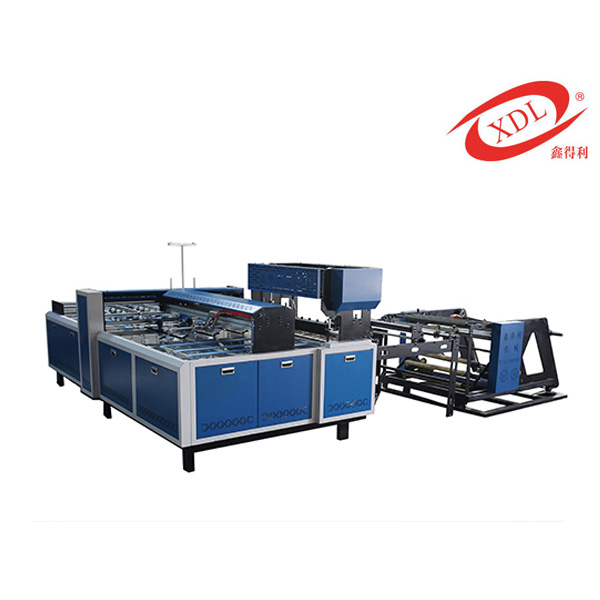
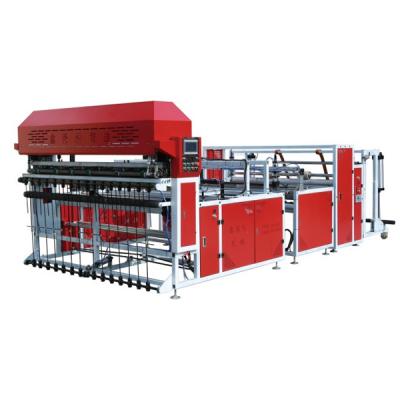
The woven bag cutting, sewing, printing, and winding integrated machine is a high-efficiency, automated production equipment widely used in the production of packaging products such as plastic woven bags, ton bags, and bulk bags. It integrates multiple processes including cutting, sewing, printing, and winding, greatly improving production efficiency and product quality. The following are the core functional features of this equipment:
What are the core functional features of a woven bag cutting, sewing, printing, and collection integrated machine?
1. Multifunctional integration
The woven bag cutting, sewing, printing, and winding integrated machine combines multiple processes such as cutting, sewing, printing, and winding into one device, achieving fully automated production from raw materials to finished products. This multi-functional integration not only reduces production steps but also lowers labor costs and equipment footprint, while improving production efficiency.
2. High-precision cutting
The equipment is equipped with a high-precision cutting system that can accurately cut woven bag materials according to preset size requirements. The cutting blades are made of high-quality materials, are highly wear-resistant, and ensure smooth, burr-free cut edges, improving the product's appearance and performance.
3. Automated sewing
The sewing system employs advanced automation technology, enabling it to automatically complete the sewing of woven bags. Sewing parameters such as stitch length and stitch density can be adjusted according to production needs, ensuring stable and reliable sewing quality. Furthermore, the equipment is equipped with automatic thread breakage detection and alarm functions to promptly identify and address problems during the sewing process, reducing the scrap rate.
4. High-efficiency printing
The printing system supports multi-color printing, meeting the diverse needs of customers for patterns and text on woven bags. The printing rollers utilize high-precision machining technology to ensure clear and vibrant printed patterns. The equipment also features automatic plate registration to ensure accurate printing position, improving product consistency and aesthetics.
5. Automatic winding
The winding system employs automatic tension control technology to ensure uniform tension on the woven bags during winding, preventing deformation or damage caused by uneven tension. The winding speed can be adjusted according to production needs, accommodating woven bag materials of different specifications and thicknesses. Furthermore, the equipment is equipped with an automatic roll-changing function, reducing manual intervention and improving production efficiency.
6. Intelligent control
The equipment adopts advanced PLC control system to realize fully automated production. The operation interface is simple and intuitive, and parameter setting is convenient and fast. The operator only needs to enter relevant parameters, and the equipment can automatically complete the production task. In addition, the equipment is also equipped with a fault self-diagnosis function, which can promptly detect and prompt problems in equipment operation, facilitating rapid repair and maintenance.
7. High efficiency and energy saving
The woven bag cutting, sewing, printing, and receiving integrated machine is designed and manufactured with energy conservation and environmental protection requirements fully in mind. The equipment uses a high-efficiency, energy-saving motor and transmission system to reduce energy consumption and production costs. Furthermore, it is equipped with a waste recycling system to recycle and reuse waste generated during production, reducing resource waste.
8. High flexibility
The equipment is highly flexible and can adapt to the production needs of woven bags of different specifications and materials. By changing different molds and adjusting relevant parameters, the equipment can produce woven bags of various sizes, shapes, and functions to meet the diverse needs of customers.
9. Stable and reliable
The key components of the equipment are made with high-quality materials and advanced manufacturing processes to ensure its stability and reliability under long-term high-load operation. In addition, the equipment is equipped with multiple safety protection devices, such as overload protection and emergency shutdown, to ensure the safety of operators and the equipment.
10. Easy to maintain
The equipment is rationally designed and compactly structured, facilitating daily maintenance and upkeep. Key components utilize a modular design, enabling quick and easy replacement and repair, reducing downtime and improving equipment utilization. Furthermore, the equipment is equipped with a detailed maintenance manual and operation guide to help operators quickly master the essential maintenance points.
11. Environmentally friendly
The equipment generates relatively little noise and dust during production, meeting environmental protection requirements. Furthermore, it is equipped with a waste gas treatment system to treat harmful gases produced during production, reducing environmental pollution.
12. High cost-performance ratio
Despite its advanced features and advanced functions, the woven bag cutting, sewing, printing, and collecting machine is relatively reasonably priced and offers high cost-effectiveness. For small and medium-sized enterprises, investing in such a machine allows them to recoup their costs in a short period and achieve considerable economic benefits.
The woven bag cutting, sewing, printing, and winding integrated machine, with its core features such as multi-functional integration, high-precision cutting, automated sewing, efficient printing, automatic winding, intelligent control, high efficiency and energy saving, high flexibility, stability and reliability, easy maintenance, environmental friendliness, and high cost-effectiveness, has become the ideal choice for the woven bag manufacturing industry. It not only improves production efficiency and product quality but also reduces production costs and resource waste, creating greater economic and social benefits for enterprises.




 鲁公网安备 37162202000141号