

How to treat the surface of plastic film
Currently, the use of synthetic organic polymer materials such as plastics, fibers, and synthetic rubber made from petroleum is increasing rapidly. However, in practical applications, people have gradually discovered many surface problems with these materials, such as low surface hardness, poor barrier properties, difficulty in printing and bonding, static electricity generation, and poor biocompatibility. These surface problems not only seriously affect the performance of these products but also greatly limit the further expansion of their application market.
Plastic film is one of the main applications of plastics, accounting for 35% of plastic usage. Due to its large relative surface area, plastic film's surface problems are more prominent, mainly manifested as difficulty in printing, bonding, lamination, droplet formation, and static electricity generation. Currently, the corona treatment technology used in domestic industrial plastic film production is corona treatment, but this method has significant limitations and is unsuitable for many large-scale applications. Plasma surface modification technology has been included in the National "863" Program, but no technological breakthroughs have been achieved to date. The main reason is that the high vacuum required by this technology makes it difficult to apply to large-scale industrial products. Solving existing problems in film products and their production, developing high-performance and functional film products, and expanding the application market for plastic films are of great significance.

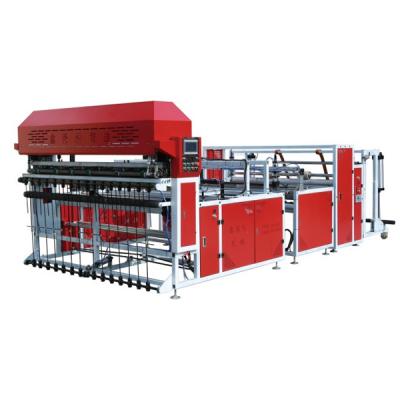
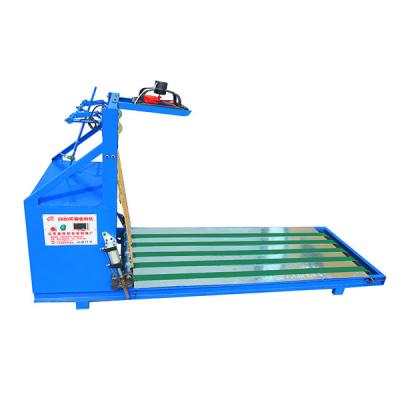
A manufacturer of integrated cold-cutting, seam-printing, and receiving machines tells you: Since 1996, the Organic Materials Surface Engineering Research Laboratory of the School of Materials Science and Engineering at Beijing University of Chemical Technology has developed a new continuous production process for preparing hydrophilic/hydrophobic asymmetric plastic films, with surface photografting as the main technical feature. This process involves intermittent small-scale, mold-scale, and pilot-scale experiments. Plastic film products obtained using this new surface treatment technology retain the original hydrophobicity on one side, while the surface polarity of the other side can be arbitrarily adjusted according to different needs, up to achieving complete hydrophilicity. Of course, both sides of the film can also be treated simultaneously to obtain symmetrically modified products.
This technology is applicable to almost all organic plastic films, such as PE, PP, PVC, PET, and nylon. The graft polymerization process allows the modified layer to be chemically bonded to the original film, resulting in very stable properties. The developed "New Technology for Preparing Long-Lasting, Drip-Free Plastic Greenhouses," combining applied basic research and application experiments, has completed industrial-scale pilot production after passing the pilot-scale evaluation organized by the Ministry of Education. A semi-continuous production demonstration device and workshop with a processing width of 2 meters has been established, completing preparations for industrial-scale production.
This production unit can be used as a standalone processing line to process finished films, or it can be attached to an existing blown film or stretched film production line to directly produce high-performance or functional film products, with lower investment costs. Using this complete technology, the surface energy of one or both sides of the produced plastic film can be freely adjusted, up to complete hydrophilicity; functional groups or reactive groups, such as acids, bases, hydroxyl groups, amino groups, anhydride groups, and epoxy groups, can also be introduced onto one or both sides of the plastic film as needed. This lays the foundation for developing various novel specialty plastic films.




 鲁公网安备 37162202000141号